
By Itai Zimunya
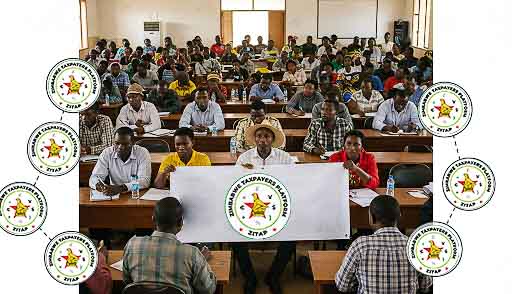
Zimbabweans are very happy as taxation voices and discussions are rising in Zimbabwe’s economic policy spaces. The unchallenged monopoly of government instituting and raising taxes willy-nilly has gone. This is good for both taxpayers and the government itself. ZITAP was conceptualised by the Mutare-based economic think-tank, The Eastern Caucus (TECA) to provide a civic and business policy platform on tax matters. ZITAP advocates for lower taxes, less public waste, more accountability and a smaller, more efficient, transparent, and accessible government.
This project initiates a tax justice campaign in Zimbabwe. The historical trend where the government or its arms propose and effect a tax or levy to solve a societal problem is expiring. The government must streamline itself, reduce waste, stop corruption and invest public revenue in the best alternatives available.
Zimbabwe has a very high cost of doing business characterised by multiple, uncoordinated and high sets of levies and taxes. These are instituted, often without consultation by the central government, local government and other sectoral regulatory authorities.
However, there is great hope especially as the Zimbabwean government has announced a process to reform and streamline these taxes to make them clearer, simpler and the process convenient for taxpayers. On the government side, this also helps tax compliance and better planning by the central government.
ZITAP works with a diverse array of actors including the private sector, especially the Confederation of Zimbabwe Industries (CZI), the Zimbabwe National Chamber of Commerce (ZNCC), small to medium-scale enterprises, the informal sector, the academia, start-up networks. On the other hand, ZITAP works with policy-makers both at the central government and local authority levels. The Ministry of Finance and Economic Development and the Zimbabwe Revenue Authority (ZIMRA) are some of its partners.
The Government of Zimbabwe has a big mountain to dismount. As evidenced by the successive Auditor General’s reports, several government departments are not accountable thereby majoring on non-essential consumptive expenditures. Politicians and Government people are richer, on average than your private sector entrepreneur in Zimbabwe. ZITAP, therefore, seeks to, among others, a) engage and mobilize Zimbabweans to demand justice and value for their monies b) campaign for lower taxes and rates, c) advocate for a limited and accountable government as the Government often wastes taxpayer funds on non-essential elements and d) promote taxpayer rights as the Zimbabwean Constitution promotes citizen agency.
The tendency to raise or introduce new taxes and levies to satisfy the government’s appetite to spend is ending. The solution to prosperity is management and freedom of capital to produce, not higher or new taxes!
Vivid Gwede is the ZITAP Director, Hillary Munedzi the Institutional Relations Manager, Evelyn Kariga – the Research Manager and George Neshiri – the Learning and Knowledge Management Manager. Itai Zimunya currently Chairs the ZITAP Board