
By ZITAP staff writer
ZITAP’s Take on Zimbabwe’s New Economic Reforms
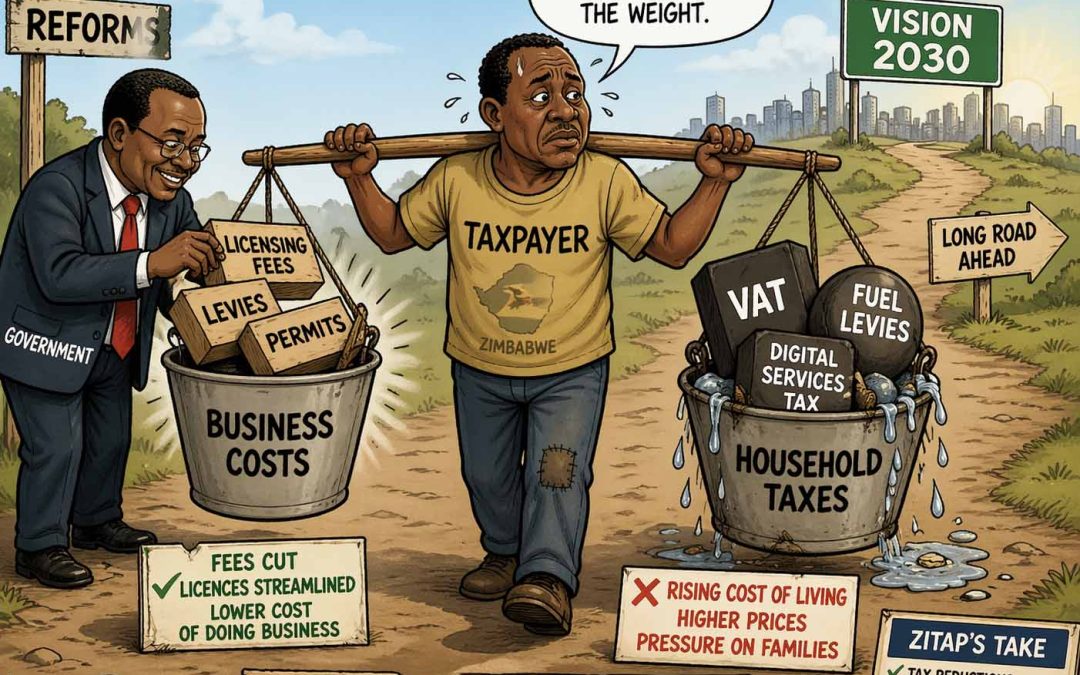
Harare, April 2026 — Zimbabwe’s Cabinet has moved to slash levies, streamline licences and remove fees across critical sectors, presenting the measures as a decisive step toward Vision 2030. The government insists the reforms will lower the cost of doing business, attract investment and signal its seriousness about opening up the economy. Yet for taxpayers, the relief is far less clear. Businesses may enjoy reduced charges, but households continue to face rising VAT, digital services taxes and fuel levies introduced earlier this year, leaving ordinary citizens questioning whether the reforms are truly comprehensive.
Streamlined licensing is framed as efficiency, but without transparency it risks becoming a loophole for rent‑seeking and selective enforcement. ZITAP argues that efficiency must be matched with accountability, otherwise the reforms could erode fairness rather than strengthen it. Cutting fees may ease the burden on investors, but the state must still secure revenue stability. Without broadening the tax base, fiscal shortfalls loom, and the promise of Vision 2030 could be undermined. Relief measures must balance incentives for business with protection for taxpayers, ensuring that growth is not achieved at the expense of equity.
For ZITAP, the reforms are welcome but incomplete. They mark progress, yet they remain cosmetic unless paired with deeper structural changes in tax collection and fiscal governance. “We welcome any effort to reduce the cost of doing business,” the platform notes, “but reforms must be comprehensive, equitable and transparent. Taxpayers deserve more than piecemeal adjustments — they deserve a system that prioritizes growth without sacrificing accountability.”
The Cabinet’s decisions will be judged not by their headlines but by their impact on the ground. For Zimbabweans striving under rising living costs, the real test of Vision 2030 lies in whether reforms translate into tangible relief. ZITAP will continue to press for tax reductions, smarter incentives and stronger safeguards, ensuring that the path to middle‑income status is built on fairness and fiscal responsibility.