
By Vivid Gwede
The announcement by Zimbabwe’s Treasury boss, Prof. Minister Mthuli Ncube, of plans to review the country’s tax regulations by around mid-year will come as music to many ears after years of lobbying by citizens and businesses.
This presents an opportunity to address longstanding issues regarding the prevailing tax compliance difficulties, over-taxation, and attendant negative effects on the doing business environment.
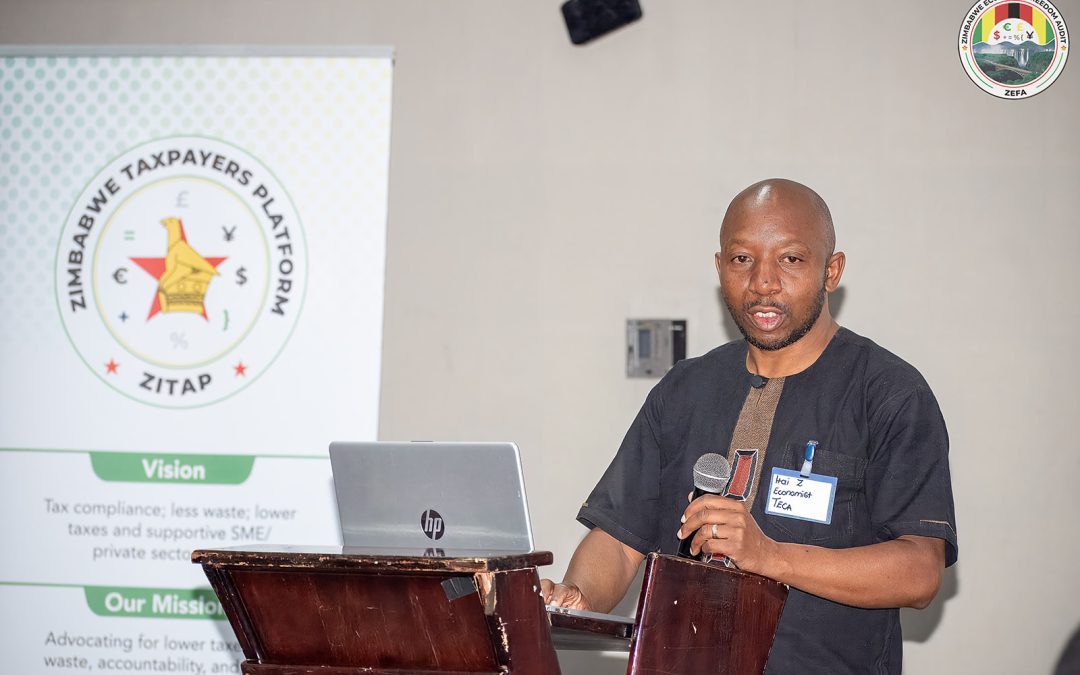
The Eastern Caucus (TECA) under the Zimbabwe Taxpayers Platform (ZITAP) is working to ensure citizens have the best opportunity to participate in this process through facilitating multi-stakeholder engagements.
ZITAP will propose reforms for smoothening compliance and lessening the tax burden and its deadweight effect on economic growth.
Zimbabwe’s corporate taxes include about 51 taxes and regulatory fees implemented by diverse regulatory bodies, highlighting the compliance headaches and high costs of doing business.
The country also ranks third after South Africa and Senegal among countries with the highest income tax in Africa at 41.2 % according to Trading Economics. This overburdens an already impoverished populace.
More taxes and levies exist at the lower tiers of government, for instance, at local government, with the Harare city council mooting three more levies on water infrastructure, street lighting, and ambulance levies. Other local governments have similar levies.
With one of the most unwieldy tax regimes in the SADC region, Zimbabwe has low investment competitiveness. Businesses in Zimbabwe will have to pay nearly 51 taxes administered by different agencies to operate compared to eight in South Africa and 11 in Zambia.
While some of the taxes recently introduced by the government in the 2025 Budget including on plastic bags, betting, fast food and alcoholic beverages may be justified to promote public and environmental health, the 2% Intermediated Money Transfer Tax (IMTT) of 2018 has been criticized for making the business operating environment unfavourable leading to business closures and high levels of informalisation.
As awareness of a burdensome tax regime increases, calls have also been made to increase transparency and prudence on the use of public revenues. While the government introduced a sugar tax to fund cancer treatment raising millions since January 2024, it is yet to procure cancer machines.
Reforming the tax regime by the government would present the best opportunity to address in Zimbabwe the crucial question in the fundamental relationship between citizens and their governments: taxation. A participatory process will be imperative to reach an optimum tax regime balancing the needs of revenue generation, economic growth and financial inclusion.
Ends//