
By Brita Gwezere
There is turmoil in the world. The middle east is on fire, with Iran, Israel and the United States and her allies fighting, what President Donald Trump called “a very short war”. The debate is not on the length of the war. This essay discusses the likely effects of this crisis in Zimbabwe. Secondly, it will propose policy solutions of how Zimbabwe can better protect itself from such global shocks in future.
Zimbabwe is heavily reliant on fuel imports to meet its energy needs. As an oil-importing country, it is vulnerable to fluctuations in the global oil market. In the current context, the military conflicts in the Middle East have already taken their toll.
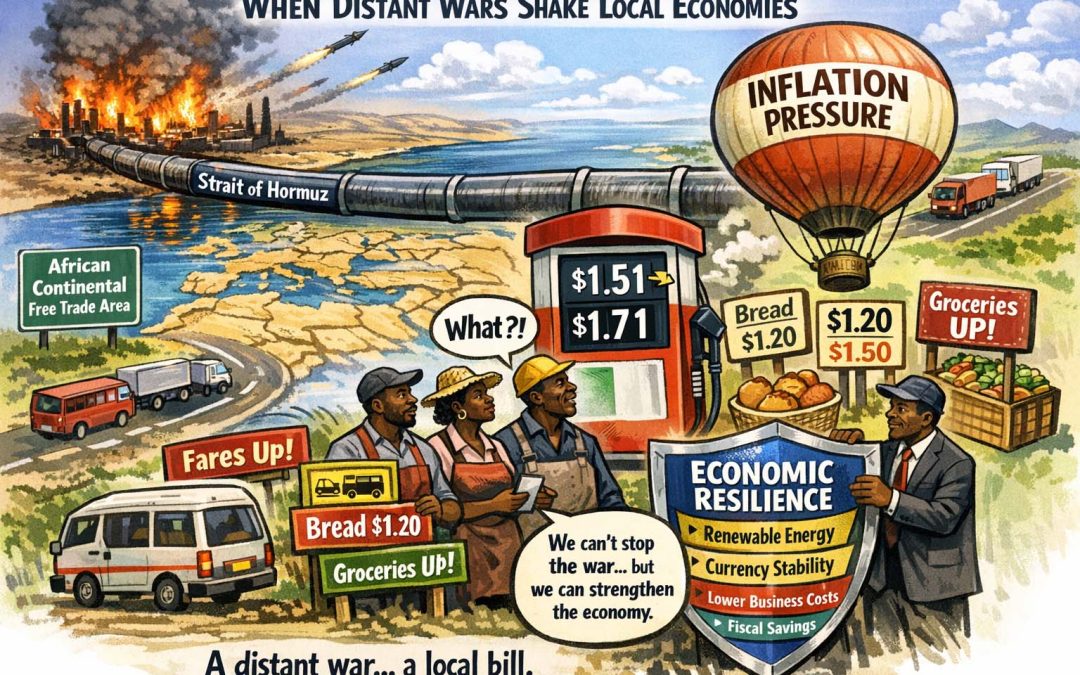
Zimbabwe Energy Regulatory Authority announced the increase in petroleum prices with 18% for diesel and 11% for blended petrol in March 2026, barely ten days after the conflict started. This follows the disrupted oil transportation routes, particularly on the Hormuz, a global shipping lane. Iran, Iraq and Saudi Arabia are major players in global oil production and the ongoing military conflict has disrupted the oil supply chains , leading to price volatility. This volatility trickles down to countries like Zimbabwe, Zambia, South Africa, and much of Africa that depend on imported oil to fuel for vehicles, industries, and electricity generation.
Higher fuel costs are expected to contribute significantly to inflation. Inflation remains a key concern to the Zimbabwean economy as the government has been riming stability in its monetary and fiscal policy plans since 2023. Historically, since 1997, Zimbabwe has struggled with high inflation rates, but recently the government has made efforts to stabilize the economy. As of January 2026, inflation had eased to 4.1%, showing economic progress. However, the increase in global fuel prices in the context of the Middle East conflict, could, or rather, will likely put pressure on the inflation rate.
The recent increase in fuel prices in Zimbabwe will undoubtedly have a significant ripple effect on goods and services across the country. As of March 5, 2026, the transportation cost of public transport spiraled. This will likely be passed onto the prices of goods in supermarket as suppliers adjust their prices in response to rising global oil prices. This increase is particularly concerning as Zimbabwe has a relatively high import bill by both value and volume. It means the country is exposed more to these negative externalities.
Consequently, this higher cost of living caused by increased fuel prices has a propensity to trigger social unrest. In Zimbabwe, poverty is widespread, and unemployment is also high, making a small increase in fuel prices have a bigger negative effect on people’s livelihoods.
The question then is, what can the government and the private sector do to mitigate this economic exposure? Zimbabwe must continue to explore solutions in stabilizing the currency, invest in renewable energy, seek regional cooperation on energy supply, and address structural issues within the economy. The private sector space must be eased, with relaxed business regulatory burdens. Taxes must be relaxed so that businesses save some money to reinvest and produce more. In terms of fuel exposure, the government must give production incentives to solar and other sources of energy to reduce the country’s exposure to oil. At a household level, families must reduce, wherever possible, the “fuel footprint” by limiting distances travelled to school, work, and other necessary places.
At a governmental level, the government must develop a robust culture of saving in case of such rainy seasons. The art of spending all that it gets or even running fiscal deficits must be a case of the past.
*Brita is a development studies expert working with The Eastern Caucus (TECa), tecazw.org. The views shared are personal and for public policy debate purposes.