
By ZITAP staff writer
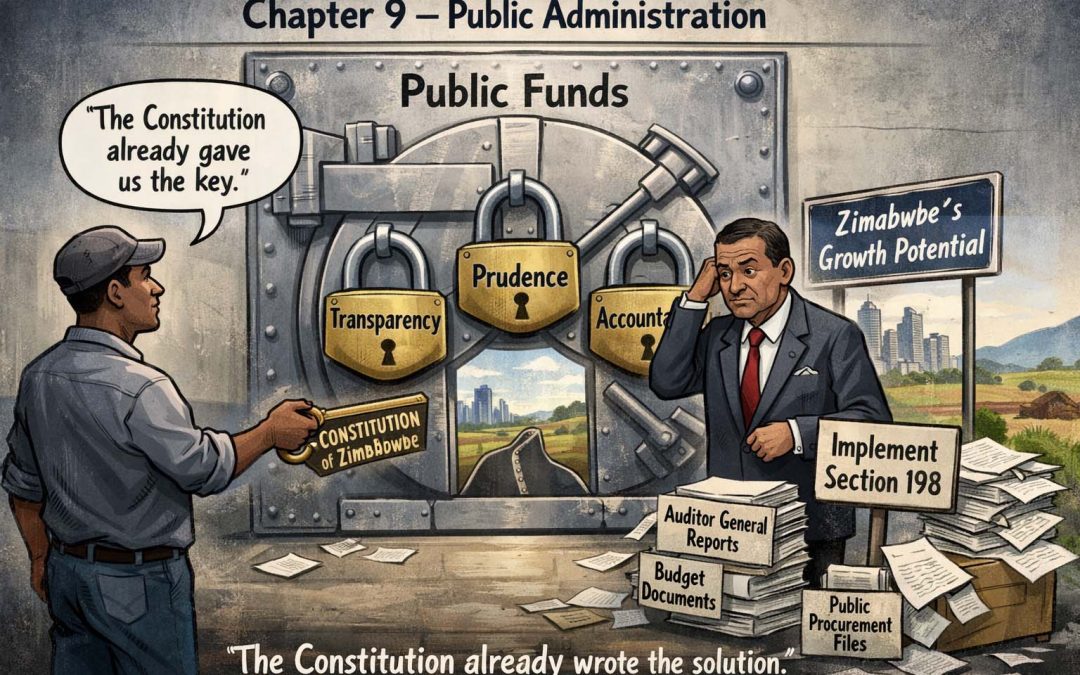
There is on going public discussion about proposals to amend the Constitution in Zimbabwe, Constitutional Bill number 3, which seeks to, among other things, extend the presidential and parliamentary terms by two years, from 2028 to 2030. That debate is crucial as it concerns key political issues. In this issue, we drive your attention to Chapter 9 of the Constitution, which concerns public administration and leadership. In short, it calls for the state, and its officers to respect tax-payers money through values of transparency, prudence, and accountability.
The policy issue, as the Zimbabwe Taxpayers’ Platform (ZITAP) always advocates, is that taxes in Zimbabwe must be reduced to give more space to the private sector and individuals. Reading the Auditor General’s reports and following public administration cases in the courts affirms the view that Zimbabwe needs more commitment to educate and implement the ideas of Chapter 9 of its Constitution. There is a lot of public waste of resources, which, other things being equal, if efficiently used, could easily accelerate Zimbabwe towards prosperity without needing increased taxes.
ZITAP will soon be writing to the Minister of Finance, Economic Development and Investment Promotion to re-focus and implement Chapter 9. It is important, especially as he, and his monetary policy team continue to figure out how to stabilise and grow the economy.
Whilst the nation celebrates the ongoing stability signified by a single digit inflation rate of 4% for February 2026, the ongoing public and private infrastructure investments as well as new highs in agricultural production both by volume and value, we still make a case that with more transparency, fiscal prudence and accountability, both at local and central government level, the rate of national growth could be higher.
Section 198 of the Constitution instructs the Minister of Finance to institute a law, an Act of Parliament that enforces Chapter 9. The Constitution specifies 4 parameters guiding that law, which are:
a) Public officers to make regular disclosure of their assets
b) Establishing codes of conduct to be observed by public officers
c) Specify the standards of good corporate governance to be observed by all officers of the State,
d) Provide for the disciplining of persons who contravene the provisions of Chapter 9, or any code or standard of corporate governance.
As the economist, Friedrick Hayek taught, our philosophies and constitutions have to inspire action, failure of which, our dreams of growth and stability will be naught. The desire to make Zimbabwe great must be accompanied by implementing the Constitution, and building a culture of accountability, probity, and prudence in its fiscal management.