
By ZITAP staff writer
This week, the Tobacco Marketing season opened. Usually, the opening day is characterised by high prices, fanfare and jubilation by the farmers. Merchants and traders also often display new technology to register and pay farmers within 30 minutes of a deal.
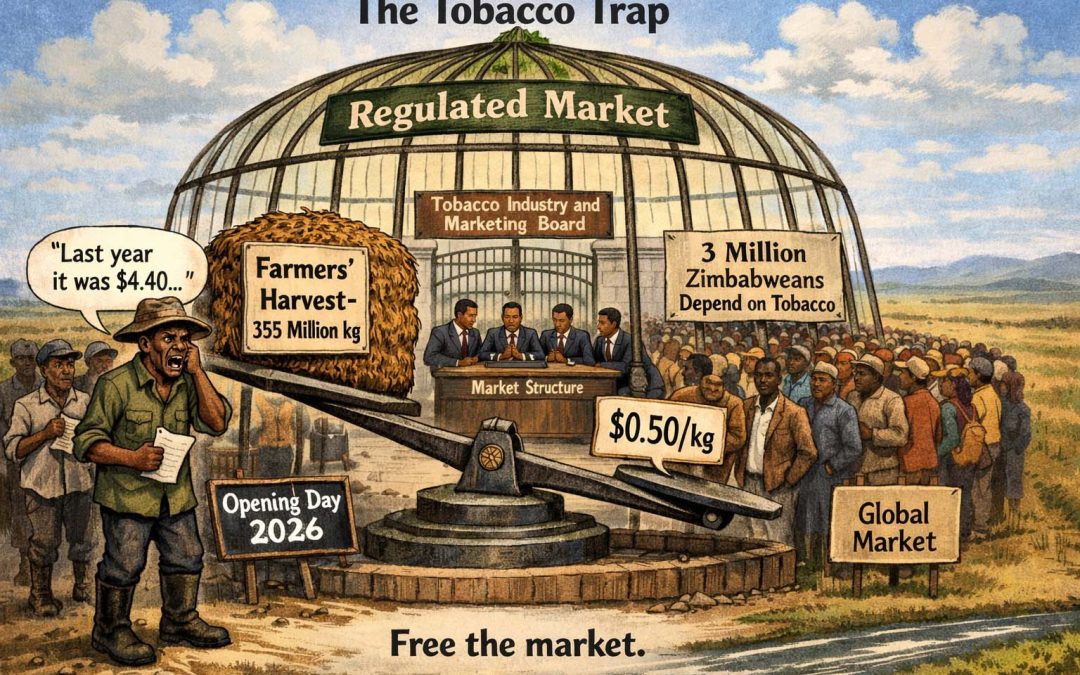
In this 2026 selling season, day one was a disaster. Average prices plunged from the usual $4.40/kg to 50 cents. Farmers complained and asked for the deals to be cancelled. They asked for government intervention. It’s a big disaster.
To understand this context, almost 3 million people survive on tobacco production in Zimbabwe. Zimbabwe’s 2025 tobacco season achieved a record-breaking performance, with production reaching approximately 353–355 million kgs, a 53% increase from 2024. In 2025, tobacco racked in US$1.17 billion at the auction floors.
Tobacco production and selling in Zimbabwe is not an open market affair. The industry is managed by the Tobacco Industry and Marketing Act [Chapter 18:20], which regulates the growing, marketing, and exporting of tobacco. It establishes the Tobacco Industry and Marketing Board (TIMB), requires registration of all growers, and mandates licensing for buyers and auction floors.
When such a monumental market collapse happens, who do you blame- the farmer or the system? Is it not time to reform the sector and open up the market. The law in Zimbabwe creates a cartel, and cartels often lead to such incidences when powerful merchants take over the system.
We, as a think-tank, raise this as our usual argument that the government must reform itself out of these cartels and free the market. Global demand and supply forces of tobacco must regulate and inspire farmers on whether to grow or not to grow tobacco. We will continue the discussion, but the current firm idea is: deregulate the industry and let the forces of demand and supply rule! Free up the market.