
By ZITAP staff writer
The Zimbabwe Taxpayers Platform (ZITAP) applauds the Reserve Bank of Zimbabwe (RBZ) for being an engaging policy actor, especially by ensuring financial inclusion and an innovative financial sector.
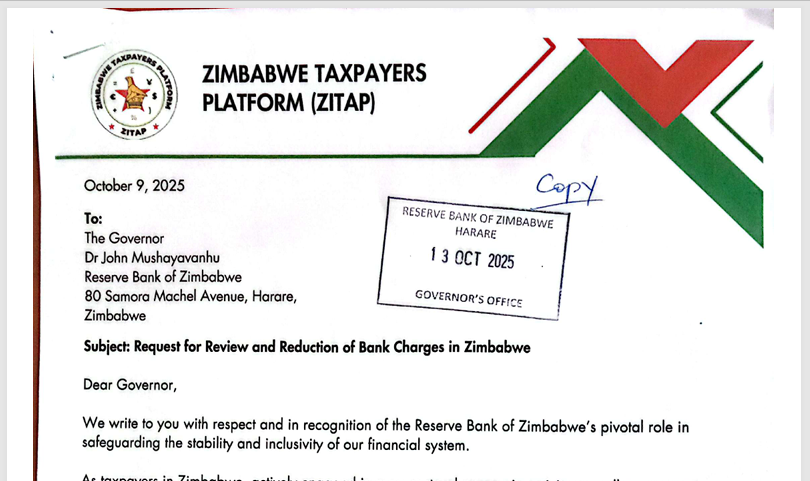
On October 9, 2025, ZITAP wrote a letter pleading with the RBZ to deploy its authority to ask the banks to review their fee’s structures, which added a non-fiscal and unjust burden on businesses and the banking public.
The RBZ has since written to the banking community to review its fee structure in line with global trends. Thank you for being an active and listening central bank!
Our arguments are simple and just.
There is a paradox in Zimbabwe. The Zimbabwean economy is starved of credit, especially when one looks at the opportunities in agriculture, mining, construction, and manufacturing. However, the banks are largely absent, often citing risk and exposure.
We question that: what risk and exposure to small-scale miners producing 75% of Zimbabwe’s gold, 65% of farmers producing more than 70% of Zimbabwe’s tobacco and maize, or the rising Horticulture Development Council export markets in Europe or China, as well as Zimbabwe’s current milk shortage of 900 million liters of milk per year?
We celebrate the Reserve Bank (RBZ)’s move to initiate a comprehensive review of prevailing bank charges, with a view to establishing a more equitable and transparent fee structure. Such a move would align with national goals under Vision 2030 and reinforce public confidence in our financial institutions. Zimbabwe’s monthly average “bank fees” (fixed charges plus withdrawal fees) range between $15 and $25 USD, depending on one’s volume of transactions. When one factors in the 2% Intermediary Money Transfer Tax (IMTT), it means citizens and businesses suffer the cost of complying with the Government’s plea to bank their money and transact online.
Also, kindly note that these bank fees further erode incomes that are already generally lower than similar job incomes within the Southern African Development Community (SADC) bloc.
The banking sector must be given the leeway to focus on its core business, credit creation. If the majority, 67% population in rural/farming areas, approximately 85% of transactions are informal sector-based, and low-income earners are excluded from the financial system, it paradoxically means, financial institutions would have to rely on “fees and charges” to survive.
Our view is that when the financial sector services the bigger part of the population, naturally, bank charges would decline. That decline would likely lead to, as is the case globally, more financial inclusion, an active credit economy, increased trust in the financial system, and a natural collapse of the informal forex market.
The current regime of charges is indirectly promoting “pillow banking” as businesses and citizens protect their little margins.
We encourage the banking sector to be innovative and play its crucial role in the ongoing growth bubble in Zimbabwe. More credit creation and lower bank fees.