
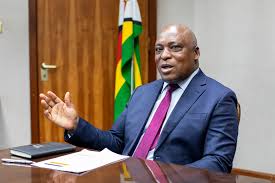
This article presents a letter to the Reserve Bank of Zimbabwe (RBZ) It is a policy response to the mid-term Monetary Policy Statement of 2025. The letter acknowledges Dr Mushayavanhu’s positive intention and challenge to both stabilise inflation and stimulate growth. The Eastern Caucus (TECa), one of Africa’s leading liberal economic Think-Tanks supports the ongoing policy reforms but calls for more bold and coordinated policy moves to ensure Zimbabwe explodes to compete with other economies globally. Secondly, the article encourages the central bank to factor views from the informal sector, which is just less formalised but significant in both volume and value of trade.
Dear Dr Mushayavanhu, RBZ Governor. Samora Machel Avenue, Harare
REF: Walking the talk, and staying the course- a letter to Dr Mushayavanhu
We welcome the mid-term Monetary Policy Statement of August 7th 2025 with two feelings, hope and nervousness.
The general promise of the whole document, that is, the stability of the Zimbabwe Gold due to a myriad of tactics and policies, including fair export cover, managed market liquidity, and banking sector stability, among other ideas, are duly noted. Reading the document as an economist makes easy-reading- and the reasoning is sound.
Kindly accept our layman’s policy letter, Dr. The idea is to be as basic as possible so that your team can possibly address these even as you plan for a mono-currency by 2030.
Below are the general pedestal realities:
1) The cost of banking: Banking in Zimbabwe remains a cost. If one deposits $100USD in Botswana, Mozambique, Zambia and Zimbabwe, and checks their balance after three months- there is a high chance that only the Zimbabwe balance would be below $100 due to some charges. For the other countries, the balance would positively increase at differing rates. This is the reality facing citizens and corporates. This “cost” has necessitated people to prefer the “pillow” as their safety net to preserve the value of their foreign currency. The big three forex earners in Zimbabwe, gold, tobacco and Diaspora remittances are immediately withdrawn and either spent or kept as cash. One would have expected your office to boldly reduce the bank-rates and return positive interest rates to the market. The fear of speculative borrowing could be dealt with by “leadership”. We discuss this leadership on point 2 below.
2) Leadership– the Government must lead in bringing and showing confidence in the local currency- the ZiG. Yes, policies and strategies are crucial but the biggest historical challenge with local currencies has been lack of public trust as a primary result of lack of leadership by central government. What stops the Government from leading in making it mandatory that all fees, taxes, duties be paid in the ZiG. All demands of forex be it for trading or leisure must be determined by the open market through banks and bureau de changes. The Government’s invisible hand is problematic in creating and nourishing this “speculative market”. We might take the cases of the four countries we discussed above. In Mozambique, street traders prefer their local Meticais to the USD. That is the same story for Botswana, Zambia or South Africa. Why is that so? Their money markets are free albeit monitored with easing or tightening by their central banks depending on trends.
3) The market square test– working with people is very different to laboratory tests which rely on hypothesis. We encourage your office to deploy constant “ZiGnometers” in public squares across all provinces and get feedback from the informal sector on whether the ZiG is now ready to be accepted. The aspect of moral suasion is big, especially since the ordinary populace, most of whom are busied within the informal sector, it only makes sense that central bank includes the informal sector, pensioners, makorokoza, farmers on their readiness to accept the ZiG. Whilst timing is crucial for all plans, we advise that the ZiG ball is in the Government’s court to show “faith and trust” in it- and if it wants to meet the 2030 timeline, the first “line” to meet are people’s hearts. The legacy of lost savings and businesses due to these currency collapses and switches is still very vivid in people’s minds. In fact, people still want their money, pensions, savings, bank balances lost in the various monetary changes including the infamous gedye-gedye “one Bond being equal to one USD”.
4) How does Government move? Government is a colossus network of systems, and not just limited to monetary authorities. The Government must dialogue with itself to remove policy incongruencies so that this agenda ZiG 2030 finds faith. As partially discussed in point 2 above, the Government needs to, for example, denominate and pay all its allowances, wages, and contracts in local currency. Those that require forex must go buy on the open market. The Financial Intelligence Unit (FIU) will surely monitor all activities as all bank or bureau de change transactions require some form of identity. This means, Ministers travelling to some foreign meeting get ZiG, and have to liquidate that ZiG at the bankrate- get their USDs, Euros, Rands or Kenyan Shilling’s and travel. This also reduces the demand for the USD because not all foreign trips primarily require the USD.
5) Buy Zimbabwe or a mere façade? At a policy level, why does the same Government that wants to save foreign currency omit to actively support the “Buy Zimbabwe” policy? The current American economic policy under President Trump is necessary for all serious economies- clothe local, eat local, holiday local, school local, manufacture locally, and medicate local among other saving methods. Again, the big error lies with the Government itself. Why would government departments including Parliament and the security sector stampede to import finished vehicles and trucks from South Africa and China when Zimbabwe’s own government-owned Willowvale Motor Industries and Deven engineering operate below 5% capacity? Does it not make sense if the Government were serious about forex cover to preserve the little forex Zimbabwe has by a mandatory import substitution and manufacture locally just as the Smith regime did in the boom years post 1965? The Zimbabwe Defense Industries has the capacity to manufacture military equipment, but without orders, they cannot. Why does the same government that wants a ZiG currency in 2030 promote other policies that deter any local currency forever?
6) Staying the course: to where?- it is good to walk the talk and stay the course but it is very important to know the direction and the road. Zimbabwe does not need to stay on course going in the wrong direction. As an economic think-tank, we agree in principle that Zimbabwe must have her own currency. At the moment, we do not necessarily differ with the RBZ because we have not see their roadmap. However, reading the mid-term monetary policy statement and learning from Zimbabwe’s recent past, we found it prudent to be simple and highlight the necessary touchstones that will enable Zimbabwe to smoothly enjoy and be proud of her own currency.
7) Free the economy- the current grip on the economy by the Government is a big cost driver. This includes the mandatory 30% forex retention for all exports. What does the Government prefer, 30% of 100%. We make an argument in points 4 and 5 above that if the Government leads in using the ZiG, then all other institutions will demand the ZiG. How can a Chinese tourist look for the ZiG when they pay the hotel, food, and transport using the USD. But if all services are payable in the local currency, then, yes, we will begin to see organic demand for the ZiG by corporates and the general public. An auxiliary aspect to this bold move is policy consistency. The Government must never go back to using visible and invisible hands in liquidating people’s accounts and savings to fund public expenditure. Rule of law means the Auditor General’s reports must be taken seriously, Parliament to have oversight on all public expenditure and debt procurement, the Mutapa Investment Fund must come back to Parliament and corruption must be nabbed. Last but not least, the Micro-Small and Medium Enterprise (MSME) sector must be given the respect it deserves including paying tax given its above 65% plus gross contribution to the national economy.
We conclude with the feeling of hope we discussed in the introduction. Zimbabwe is ready to fly and explode as an economic powerhouse. However, it needs an inter-Ministerial taskforce which uses public sentiment as a metric. Bookish economic theories packaged in jargon will not move uNakaThabo in Pumula or Sekuru aSango in Chipinge. Let us remain simple, consultative, inclusive, and purposive. This is Zimbabwe’s moment to prosper!
The Eastern Caucus (TECa) is a free-market think-tank based in Mutare. It opines that a $100bn economy is in sight with right policy changes.