
By Blanche Wadzanai Mhonda
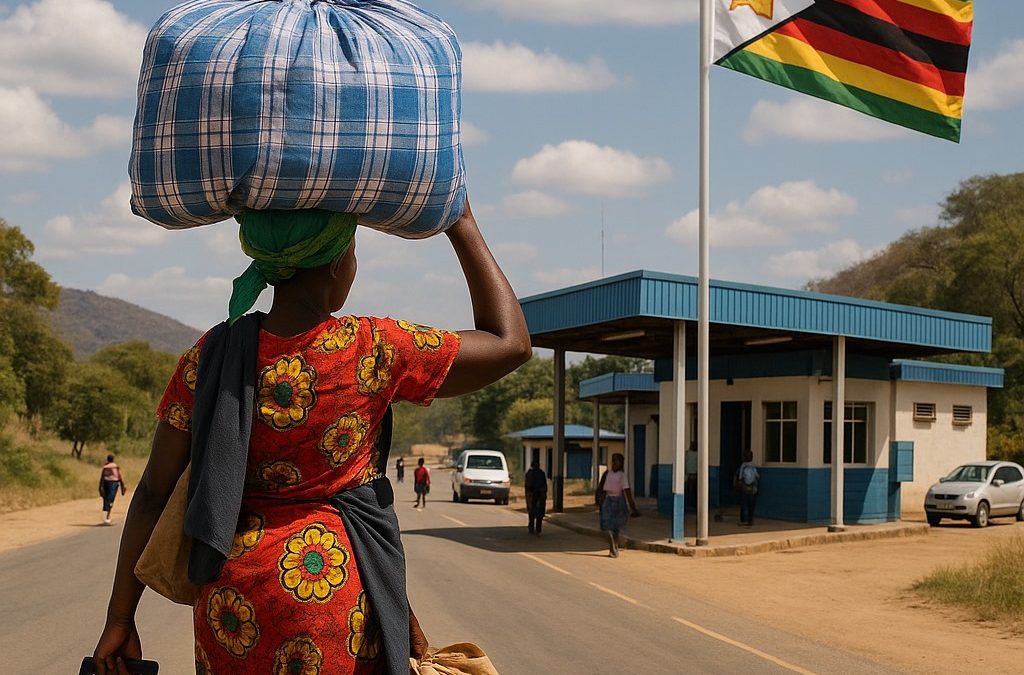
Every day, before dawn breaks, thousands of Zimbabwean women begin long, uncertain
journeys to border posts. With goods strapped to their backs, children in tow, and
determination in their hearts, they navigate customs lines, negotiate currency rates, and
confront unpredictable border enforcement. These are not ordinary commutes, they are
daily acts of economic survival and regional integration. Despite powering a multi
million-dollar informal trade ecosystem, these women remain largely invisible in national
economic strategy. Their work is undervalued, their risks under-recognized, and their
contributions under-leveraged.
Across border towns like Mutare, Beitbridge, and Plumtree, generations of women have
kept families afloat through informal cross-border trade. This economic activity has
enabled many to send children to school, some even through university, and to feed,
clothe, and house extended families. In the absence of steady formal employment and
amid economic decline, women cross-border traders have shouldered national resilience
through grit and ingenuity.
This trade often conducted on buses, in market stalls, or by foot, is driven by real needs:
the need for income, food security, and survival. But it is also a story of aspiration. These
women are not just trading; they are investing in a better future for their children and
families, their communities, and their country.
TECa’s Strategic Interventions
At TECa (The Eastern Caucus), we believe that these women represent one of
Zimbabwe’s most dynamic engines of prosperity. Far from being informal “hustlers,”
they are entrepreneurs, exporters, and market builders, deserving of support, protection,
and investment.
Through the Prosperity Catalyst Clubs, we intend to achieve the following:
- Policy Advocacy for Gender-Responsive Trade Systems
TECa is engaging with national and regional policy platforms to push for trade policies
that reflect the realities of women traders. This includes simplified customs protocols,
reduced non-tariff barriers, and gender desks at key border points. - Legal Literacy and Rights Awareness
TECa is developing a legal empowerment curriculum tailored to women traders, teaching
them about border regulations, licensing procedures, rights during inspections, and
mechanisms for reporting abuse. - Border Trade Resource Hubs
TECa plans to launch small, modular hubs at major border crossings. These centers will
serve as one-stop points for licensing information, safe spaces, dispute mediation, and
access to mobile financial services. - Inclusive Financial Access
TECa is working with financial service providers to design flexible microcredit,
insurance, and savings products aligned to the cash flow patterns of women in informal
trade. Our pilot programs will also introduce digital wallets to reduce reliance on unsafe
cash transactions. - Data Collection and Trader Profiling
Without data, women in informal trade remain invisible. TECA will implement
participatory data collection initiatives to map trade volumes, challenges, and
contributions, creating a basis for evidence-based policymaking and financial inclusion. - Stakeholder Roundtables
We are convening regular dialogue platforms between women traders, border officials,
customs agents, and government departments to foster accountability, trust, and
responsive governance.
TECa is building a bridge from informal resilience to formal recognition, whereby
women move from borderline survival to regional prosperity. Zimbabwean women
deserve to and have the power to shape the economic landscape of the country.