
By Itai Zimunya
This article looks at two things, why are Zimbabwean made goods so expensive and what needs to be done. It takes a general economic theory approach so that policy makers and ordinary citizens actively engage the debate.
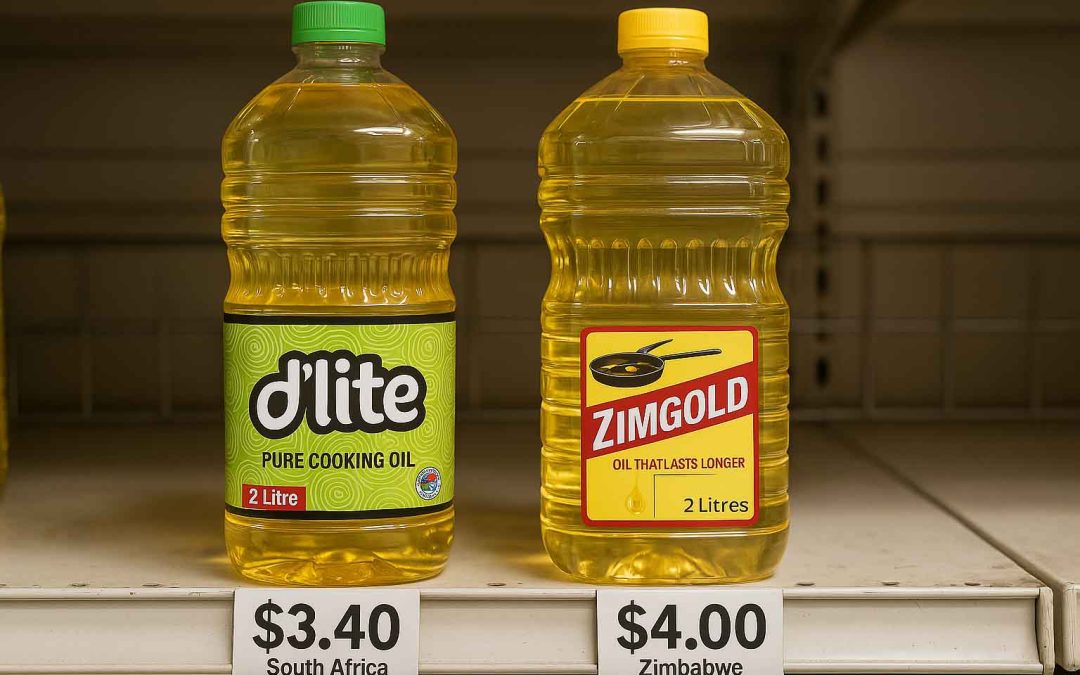
There is a vexing question to all and sundry in Zimbabwe. Why are Zimbabwean made goods so expensive? Why do Zimbabweans flood the region, Johannesburg, Dar e Salaam, Beira to buy consumable goods including food and clothing and used motor vehicles? It is real and bizarre at the same time. A basic example is why Zimbabwean made basic goods like milk, biscuits, sweets, drinks, cutlery and clothing trade at a higher cost than those imported from Zambia and South Africa? So, it means, when you factor transport costs plus duty and other margins of getting goods from South Africa, they still trade at a lower price than goods manufactured 10 minutes away in Belmont or Willowvale. Why? The answer is simple- the cost of doing business in Zimbabwe is just too high.
Fortunately, we make this discussion at a time the Government of Zimbabwe, through its various agencies like the National Competitiveness Commission of Zimbabwe https://www.ncc-zim.co.zw/ and the Zimbabwe Investment Development Authority https://zidainvest.com/ are seized with this issue.
In our view as The Easten Caucus (TECa), this national initiative is the next biggest project after the constitution making process. When Zimbabwe reforms its taxation and cost of doing business, as business mogul Strive Masiiwa predicts, capital will fly to Zimbabwe. Generally, when that happens, it means more employment, more prosperity and a general rise in people’s standards of living.
Since the process is in motion, below we present a set of ten crucial issues that Zimbabwe needs to look at to enhance its ease of doing business. These were postulated by three leading economists, working with the World Bank in 2002. The ease of doing business index was created jointly by Simeon Djankov, Michael Klein, and Caralee McLiesh. It remains important for polities transitioning from welfarist states into prosperity states.
These include, in particular order:
- Starting a business – Procedures, time, cost, and minimum capital to open a new business. We recommend a mobile application for people to do it online.
Dealing with construction permits – Procedures, time, and cost to build a warehouse. Corruption must be reduced at Councils.
Getting electricity – procedures, time, and cost required for a business to obtain a permanent electricity connection for a newly constructed warehouse. ZESA and ZERA must reduce their fees and make it easy for people to generate power.
Registering property – Procedures, time, and cost to register commercial real estate. Taxation and legal barriers must be reviewed.
Getting credit – Strength of legal rights index, depth of credit information index. The banking sector must be sorted. Interest is too high in Zimbabwe.
Protecting investors – Indices on the extent of disclosure, the extent of director liability, and ease of shareholder suits
Paying taxes – Number of taxes paid, hours per year spent preparing tax returns, and total tax payable as a share of gross profit. ZIMRA needs to use technology to ease the process of doing tax returns. TaRMS is complex.
Trading across borders – Number of documents, cost, and time necessary to export and import. Too many complex taxes, permits and procedures. These must be easy to find on one portal.
Enforcing contracts – Procedures, time, and cost to enforce a debt contract. The judiciary must be solid and trustworthy – from the police to the courts.
Resolving insolvency – The time, cost, and recovery rate (%) under a bankruptcy proceeding
The ten above are exhaustive but give a good starting place for Zimbabwe to transform its massive mineral, agricultural and intellectual endowments into prosperity. Once we improve our competitiveness, Zimbabwe can become Africa’s bread basket again!
Sources
https://www.worldbank.org/ext/en/home
https://www.zimra.co.zw/
- Starting a business – Procedures, time, cost, and minimum capital to open a new business. We recommend a mobile application for people to do it online.
Dealing with construction permits – Procedures, time, and cost to build a warehouse. Corruption must be reduced at Councils.
Getting electricity – procedures, time, and cost required for a business to obtain a permanent electricity connection for a newly constructed warehouse. ZESA and ZERA must reduce their fees and make it easy for people to generate power.
Registering property – Procedures, time, and cost to register commercial real estate. Taxation and legal barriers must be reviewed.
Getting credit – Strength of legal rights index, depth of credit information index. The banking sector must be sorted. Interest is too high in Zimbabwe.
Protecting investors – Indices on the extent of disclosure, the extent of director liability, and ease of shareholder suits
Paying taxes – Number of taxes paid, hours per year spent preparing tax returns, and total tax payable as a share of gross profit. ZIMRA needs to use technology to ease the process of doing tax returns. TaRMS is complex.
Trading across borders – Number of documents, cost, and time necessary to export and import. Too many complex taxes, permits and procedures. These must be easy to find on one portal.
Enforcing contracts – Procedures, time, and cost to enforce a debt contract. The judiciary must be solid and trustworthy – from the police to the courts.
Resolving insolvency – The time, cost, and recovery rate (%) under a bankruptcy proceeding
The ten above are exhaustive but give a good starting place for Zimbabwe to transform its massive mineral, agricultural and intellectual endowments into prosperity. Once we improve our competitiveness, Zimbabwe can become Africa’s bread basket again!
Sources
- https://www.worldbank.org/ext/en/home
- https://www.zimra.co.zw/
- https://www.ncc-zim.co.zw/